Beginner's Music Accessory Checklist: What to Buy First and What to Skip
You have the instrument. The hard part should be over, except that every shop page you open suggests you need a dozen more things before you can play a note. Most of that list is optional, and a fair amount of it will end up in a drawer next to the cable you never uncoiled. There is a smaller, genuinely useful set of accessories that makes practice smoother from day one: a way to tune, a way to keep time, somewhere to put your music, and a few consumables matched to your instrument. Here is what to buy in your first weeks, what to leave on the shelf, and how to tell the difference.
Check the Box Before You Buy Anything
Beginner instruments usually arrive with more than you expect. A student violin often comes with a bow, a case and a cake of rosin. Electric guitars ship with a cable, sometimes a strap and a few picks. Digital pianos include a sustain pedal, and many bundles throw in a bench. Rentals from a shop frequently include the case, a mouthpiece and a ligature.
So before you order anything, lay everything out on the floor and read the manual. You will often find that two or three items on your mental shopping list are already sitting there. This also tells you what the instrument is missing, which is what you actually need to buy.
Six Things Nearly Every Beginner Needs
The list below holds up across guitar, piano, violin, saxophone and drums. The specific product changes; the job does not.
- A tuner. A clip-on tuner that reads vibration works in noisy rooms and does not care about background conversation. Phone apps are perfectly fine for the first months, but a clip-on is faster to grab and stays with the instrument. Tuning by ear is a skill you build later, not a starting requirement.
- A metronome. Free apps do the job, but a small physical metronome with a dial and a loud click is easier to use with both hands busy. Timing is the thing beginners neglect longest, and having the click within reach makes it a habit rather than a chore.
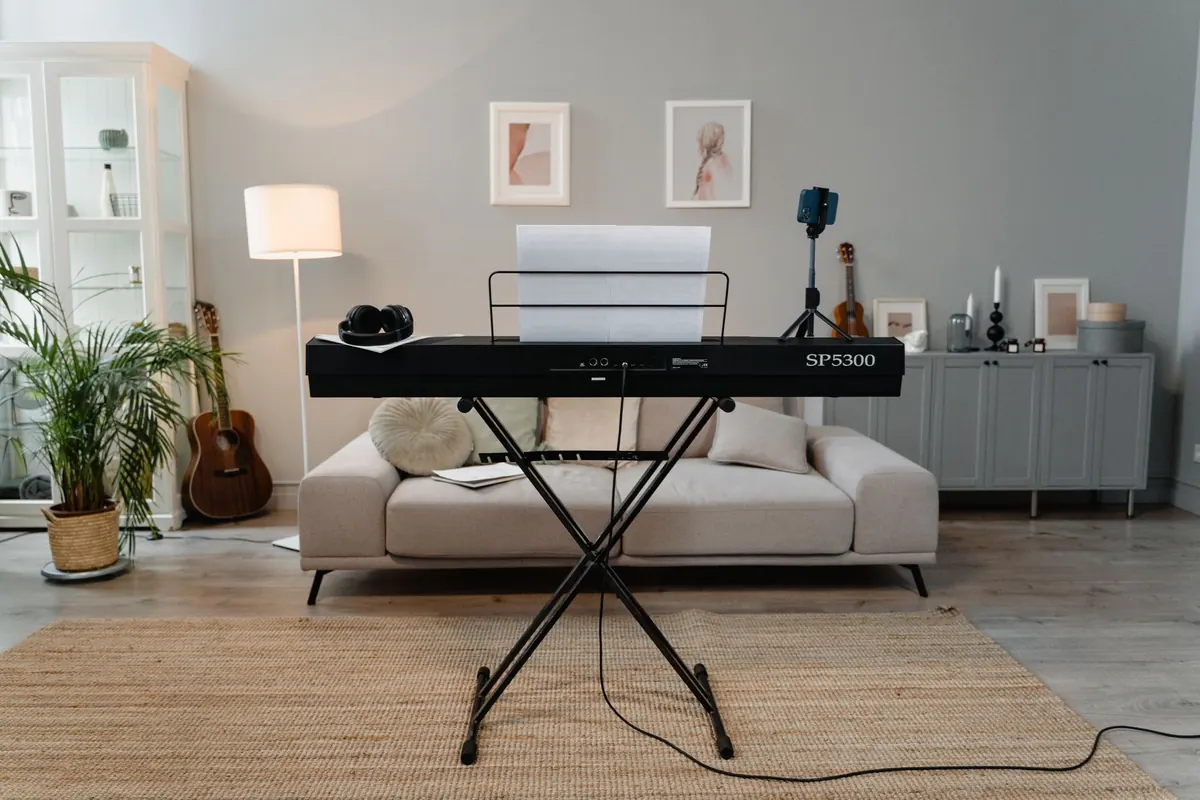
- A music stand. A folding black stand costs little and changes how you practise. A book flat on a chair means you lean forward, squint and lose your place. Set the stand at eye level, and use it for a tablet or a notebook too.
- Spares of whatever breaks. A spare set of strings, two or three spare reeds, a handful of picks, an extra pair of drumsticks. Consumables fail at the worst possible moment, usually the night before a lesson.
- A cleaning cloth. A microfibre cloth for wiping strings and the body after playing, plus a swab if you play a wind instrument. Thirty seconds of wiping keeps strings alive longer and stops moisture sitting where it should not.
- A bag or case that fits properly. If the instrument came with a soft gig bag, that is enough at first. A hard case matters when the instrument starts travelling in a car boot or a van.
Instrument-specific additions
Once the basics are covered, add the consumables your instrument lives on. Guitarists want picks in two or three thicknesses (a thin one for strumming, a medium or heavy for single notes), a strap for standing, and a capo if you plan to play songs with open chords. Bowed-string players need rosin, a shoulder rest or rock stop, and a spare set of strings. Wind players should buy reeds in two adjacent strengths rather than a box of one, plus cork grease and a small reed case. Keyboard players may need a sustain pedal if one was not included, and a decent pair of headphones for quiet practice. Drummers need sticks in two sizes, a practice pad and hearing protection; if volume or ringing ears worry you, speak to a hearing professional rather than pushing through.
Keep a small kit in the case
A pencil, a notebook for lesson notes, a spare battery for the tuner, a peg winder if you play guitar, and a couple of spare picks or reeds. This kit should live in the case pocket so it travels with the instrument and never becomes a search operation before practice.
Accessories You Can Safely Skip
None of the following is useless forever. It is simply the wrong thing to buy before you know how you play.
- Starter accessory bundles. They look like good value, but the contents are usually the cheapest version of each item: a stand that wobbles, a tuner that drifts, a capo that buzzes. Buy the four or five things you need individually and get better versions.
- Effects pedals and a full amp for a first electric guitar. A small headphone amp or the amp you already have will carry you through the first year. Pedals are fun and completely unnecessary while you are still learning where the notes are.
- Premium cables and gold-plated anything. A basic, well-made cable is fine. Save the upgrade money for strings and lessons.
- Humidity gadgets beyond a simple hygrometer. If you own a solid-wood acoustic instrument, watching room humidity is worth doing. Start with an inexpensive hygrometer and a case, and only add a humidifier if your readings tell you to.
- Decorative stands, wall hangers and multiple racks. One safe place to rest the instrument is enough. Buy the second stand when you own the second instrument.
- Soundproofing panels and foam kits. They do not soundproof a room, and they solve a problem you may not have. Talk to neighbours first and practise at sensible hours.
- Subscription practice apps bought on day one. Try the free tiers for a month before committing to anything annual.
Spend Where It Matters
A simple rule: put money into things that touch your sound or your body, and save on things that only hold or measure. Strings, reeds, a mouthpiece, a shoulder rest, a strap, a stool you sit on for an hour — these affect how the instrument feels and sounds, so a decent version pays you back. A tuner, a metronome, a folding stand, a cleaning cloth and a gig bag can all be inexpensive without hurting your progress.
Two cautions. First, avoid unbranded strings and reeds from marketplace listings; counterfeits are common and they play badly, which makes beginners think they are the problem. Second, buy from a shop with a clear return policy, especially for anything that has to fit your body, like a strap, a shoulder rest or a stool. A shop that will let you try before you buy is worth a small premium.
A First Shopping List
- Clip-on tuner (or a tuner app for the first month).
- Metronome, physical or app.
- Folding music stand.
- Microfibre cloth, plus a swab if you play a wind instrument.
- Spare strings, reeds, picks or sticks — two of each.
- Instrument-specific consumables: rosin, capo, strap, cork grease, headphones, hearing protection.
- Pencil and a small notebook for the case.
Buy in Two Rounds
Treat your first purchase as round one: the list above, nothing more. Then keep a note in your phone for a month or two and write down the moments you wish you had something — the reed that died mid-rehearsal, the practice session that fell apart without a click track, the gig bag strap that dug into your shoulder on the walk home. That list is your round two, and it will be far more accurate than any bundle on a shop page.
If you take lessons, ask your teacher what they would add next. They see how you play every week and can tell the difference between a genuine gap in your kit and a purchase you are excited about. Most players end up with a modest, well-chosen set of accessories and a lot of hours on the instrument, which is exactly the right ratio.
Photo: Alina Vilchenko / Pexels
Folding Music Stand Checklist: What to Test Before Rehearsal or a Gig
A practical pre-rehearsal and pre-gig check for folding music stands, covering joints, desk angle, feet,...

Back-to-School Practice Gear Checklist for Music Students
A practical, season-by-season checklist of the stand, folder, light, metronome, tuner, and bag a music...
About Us